Home > Blog > How to Avoid Water-Soluble Fertilizer Plant Mistakes
How to Avoid Water-Soluble Fertilizer Plant Mistakes
Date 2026.08.21
Share
Introduction
A first water soluble fertilizer powder plant faces avoidable risk when machines are purchased before the product, factory, and sales plan are defined. The safer route is to size the line to proven demand, control moisture from raw-material storage through packing, plan formula changeovers, and match every machine to one flow. For a new investor, water soluble manufacturing should begin with a production brief, not an equipment shopping list.
Mistake 1: Buying Capacity Before Defining the Product
Capacity matters only when tied to formula, batch size, operating hours, and bag format. A water soluble NPK fertilizer factory running several retail formulas needs more changeover time than a single-formula bulk plant. Size a powder water-soluble fertilizer plant from realistic orders, not the largest hourly figure in a brochure.
Match the investment to four operating inputs
*Expected monthly sales and the number of production shifts.
*Raw-material form, flowability, moisture sensitivity, and formula range.
*Required batch size, bag weights, and finished-goods storage.
*Space for enclosed transfer, cleaning access, and later expansion.
Water-soluble fertilizer (WSF) manufacturing plant cost covers the complete process, not the mixer alone. Compare crushing, dosing, conveying, storage, packing, utilities, controls, installation, and commissioning. A balanced water-soluble fertilizer factory prevents overspending on one machine while undersizing another.
Mistake 2: Ignoring Moisture, Heat, and Caking
Moisture control belongs across the powder route. Urea, potassium nitrate, magnesium sulfate, ammonium sulfate, and humic acid powder can absorb moisture, while localized heat or uneven liquid addition can cause caking. A water soluble fertilizer manufacturer should review storage, enclosed transfer, mixing, and packing as one control system.
Low-temperature reduction matters when urea needs crushing. A roller urea crusher grinds and shears between rollers, allowing the gap to control fineness with less heat and dust than high-impact crushing. Move crushed urea promptly into mixing and protect hoppers, conveyors, and packing feed from humid air.
Control powder quality before it reaches the bag
The powder line should check incoming material, block wet powder from the process, and verify product before packing. These controls protect flow and reduce interruptions in dosing, mixing, or bag filling.
Mistake 3: Treating Every Formula as the Same
Formula variety changes the equipment duty and the cleaning burden. In a double ribbon mixer, inner and outer ribbons move powder in opposite axial directions to create circulation and shear. The action suits powder blending, but batch load, mixing time, liquid addition, and discharge sequence still need trials with the buyer’s materials.
Changeover discipline protects consistency in a water soluble NPK fertilizer factory. Operators should load macro-elements before trace materials, validate the cycle, record the recipe, and clean contact areas before the next formula. The double ribbon mixer needs practical inspection access so residual powder does not enter the next batch.
Separate engineering principles from project guarantees
The crusher mechanism, ribbon circulation, and process sequence above are documented engineering starting points, not universal performance guarantees. Formula, material condition, ambient humidity, layout, batch load, and bag format still require project trials. The changeover method should define cleaning tools, inspection points, release authority, and first-batch checks.
Mistake 4: Letting One Machine Become the Bottleneck
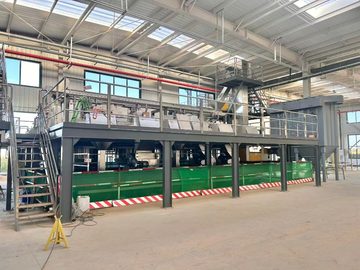
A production line performs at the pace of its slowest stage. The powder process may include crushing, automatic dosing, mixing, enclosed delivery, temporary stocking, packing, and PLC coordination. A powder water-soluble fertilizer plant misses its target when the mixer waits for dosing, a hopper interrupts flow, or packing cannot clear each batch.
Approve the line as one connected system
*Request a process flow showing every machine, hopper, conveyor, and control point.
*Confirm batch timing and buffer capacity across dosing, mixing, and packing.
*Run the intended bag on the selected packing machine before acceptance.
*Check that PLC interlocks stop upstream feeding when a downstream stage is unavailable.
A balanced water-soluble fertilizer factory needs cleaning and maintenance access without major dismantling. Review operator movement, material staging, bag removal, utilities, and service space before fabrication.
Mistake 5: Ordering Without an Acceptance Plan
An acceptance plan converts a quotation into measurable obligations. Define contact materials, batch and bag formats, automation, cleaning access, test materials, documents, installation, training, and after-sales scope before ordering. This protects the supplier and the new water soluble fertilizer manufacturer from assumptions after delivery.
Water soluble manufacturing decisions should separate reference specifications from guaranteed project data. Capacity changes with formula, bulk density, flowability, moisture, and layout. Water-soluble fertilizer (WSF) manufacturing plant cost is easier to compare when bidders price the same test basis, utilities, spares, and commissioning result.
Acceptance item
Project basis agreed before order
Evidence retained at test
Batch rhythm and output
Buyer materials and the agreed batch plan
Timed production log signed by both parties
Mixing consistency
Agreed sampling points and test method
Sample register and signed test record
Packing performance
Target product, bag, closure, and run condition
Weight, closure, and continuous-run record
PLC sequence
Agreed interlocks, alarms, and operating steps
Function checklist and alarm record
Formula changeover
Agreed cleaning and release method
Inspection and first-batch release sheet
Documents and training
Agreed manuals, drawings, and training scope
Signed handover and attendance record
Prepare evidence before asking for a final quote
A useful request includes raw materials, formulas, output, bags, factory drawing, power, and automation. State the finished-powder and packing trials to witness so SAFI Machinery can configure the actual project.
Turn the Risks Into a Workable Plant Brief
A clear plant brief is the fastest way to prevent these five mistakes. Send SAFI Machinery your formulas, raw-material condition, target capacity, bag formats, factory layout, and utility information. We can map crushing, dosing, mixing, delivery, storage, packing, and control into one water-soluble fertilizer plant concept, then define the tests and quotation scope. This gives a new water-soluble fertilizer manufacturer a reviewable starting point.
FAQ
What determines water-soluble fertilizer (WSF) manufacturing plant cost?
The project cost depends on formulas, preparation, batch size, automation, enclosed transfer, storage, packing, utilities, installation, and tests. Compare complete scopes; a low machine price may omit equipment or services needed for stable powder.
Is a powder water-soluble fertilizer plant suitable for a first project?
It can suit a new investor when demand, formulas, bags, and shifts support the selected capacity. A modular layout limits initial capital, but phase one still needs moisture control, cleaning access, matched packing, and a production test.
Which crusher suits urea in water soluble manufacturing?
This process benefits from a roller urea crusher when granular or caked urea needs grinding. Roller shearing limits heat and dust while the gap adjusts fineness. Select it based on actual feed conditions, required powder size, and hourly demand.
Why does a water–soluble NPK fertilizer factory need a ribbon mixer?
This plant needs consistent macro-elements and low-dose ingredients. The double ribbon mixer circulates powder through opposing ribbons and can support liquid spraying. Trials should confirm load, sequence, time, discharge, and cleaning rather than one universal setting.