Home > Blog > Liquid vs. Granular Fertilizer for Startup Plants
Liquid vs. Granular Fertilizer for Startup Plants
Date 2026.08.28
Share
A startup fertilizer plant usually has one uncomfortable first decision: make a product that enters the market quickly, or build a line that matches a familiar dry-granule business. Liquid and granular fertilizer can both work, but they ask different things from capital, operators, packaging, and early customers. The better first choice protects cash flow while proving that the formula can be made repeatably.
The first choice is really about operating pressure
Liquid fertilizer favors startups that need a lower-energy route to saleable product. A liquid line avoids evaporation, drying, and granulation stages, so the early factory is built around dissolution, reaction, filtration, storage, pumping, and filling. That makes the first rhythm easier for teams coming from fertilizer trading, farms, or regional distribution.
Granular fertilizer asks for a different discipline from the first month. The plant has to control powder feed, granule formation, particle strength, screening, return material, drying or cooling when needed, and bagging. That route can create a durable product, yet it needs more mechanical tuning before sales volume is steady.
Where liquid fertilizer feels lighter
A liquid project often feels lighter because the process moves through tanks and pipelines instead of a long chain of solids-handling equipment. Water quality, formula compatibility, mixing time, corrosion resistance, filling accuracy, and bottle behavior become the main daily controls.
*Fast product trials when the market is still being tested
*Flexible formula adjustment for local crop programs
*Less dust and no moisture-caking issue in the finished product
Where granular fertilizer earns its place
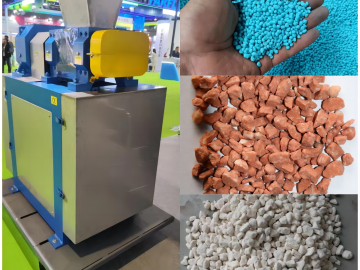
A granular route earns its place when customers prefer dry bags, when storage and transport already serve granules, or when the product depends on particle appearance and spreadability. In that case, the first line is a controlled solids process with material preparation, forming, sizing, and packing working together.
A startup should match product form to sales evidence
Sales evidence should decide the first plant form before equipment ambition does. If current customers buy foliar nutrition, fertigation inputs, seaweed or amino-acid formulas, chelated micronutrients, or liquid organic fertilizer, the sales path points toward liquid. If dealers ask mainly for NPK granules or dry field application, granular production may fit better.
This is where a founder should be strict. A high-volume keyword or an attractive machine video is not enough evidence. Useful evidence repeats: the same product type, pack size, margin band, and buying season across enough customers to support a small first line.
Decision point
Liquid-first startup
Granular-first startup
Early product proof
Small batches can validate formulas and packaging quickly
Trial runs must prove granule strength, size, and yield
Main factory control
Water quality, mixing, reaction, filtration, filling
Liquid fertilizer can shorten the first factory cycle
A well-scoped liquid fertilizer production line can shorten the first factory cycle because the plant can be planned around formula preparation, mixing or reaction, filtration, storage, and filling. SAFI Machinery supports liquid fertilizer projects within a 100 to 30000 tpy range, giving new investors room to expand around proven demand.
The equipment still has to fit the chemistry. Clear solutions, suspensions, gel fertilizers, amino-acid liquids, and liquid organic formulas do not behave the same way inside a tank. Some products need purified water, pre-dissolving, high-speed dispersion, heating, shear mixing, filtration, storage, and anti-drip filling. A practical liquid fertilizer machine setup starts with formula behavior, not a fixed tank list.
Packaging deserves early attention because many liquid fertilizer complaints appear after filling, not during mixing. Acidic formulas can react with poor bottle fillers, impure raw materials can release gas, and unstable suspensions can settle during storage. A smaller, cleaner first range is wiser than many half-tested liquids.
Granular fertilizer can be better when the market rewards dry products and the team can manage mechanical variables. Roller press granulation, drum granulation, disc granulation, and other forming routes change capital cost, energy use, raw-material limits, granule shape, and maintenance. The startup must prove quality stays stable across shifts.
A granular fertilizer production line also exposes raw-material weaknesses quickly. Moisture, particle size, hardness, binder behavior, and screening return all affect finished quality. When investors underestimate those variables, the line may run, but the product may not satisfy customers who judge bags by appearance, strength, and consistency.
A simple readiness test
A startup leaning toward granules should test whether its market certainty is strong enough to justify the extra process burden. If the answer to several of the following questions is weak, liquid may be the calmer first step.
*Do customers already request granular fertilizer by grade and bag size?
*Can the raw materials meet the chosen granulation route’s moisture and size limits?
*Is there enough space for screening, return material, drying or cooling, and packing?
*Can the team inspect granule strength and particle-size distribution every batch?
The better first plant is the one you can repeat
The best first plant is not automatically the cheaper one. It is the plant a startup can repeat without exhausting capital, confusing operators, or disappointing early customers. Liquid usually wins when speed, formula flexibility, and lower solids-handling complexity matter most. Granular wins when the market pays for dry form and the team can control mechanical details.
For many new investors, the sensible path is to launch with the narrower product form that has the clearest sales evidence, then design the factory so later expansion is not awkward. If liquid demand is visible, a compact liquid fertilizer line can prove formulas, packs, and repeat orders before a larger dry-granule project.
When the first product range, raw materials, and target packs are clear, SAFI Machinery can help turn that evidence into a practical line layout for liquid or granular fertilizer production.
FAQ
Is liquid fertilizer cheaper to produce than granular fertilizer?
Liquid fertilizer can require less early process equipment because it avoids drying and granulation, but the real cost depends on formula type, tank material, filtration, filling format, automation level, and required storage stability.
Why might a startup choose granular fertilizer first?
A startup may choose granular fertilizer first when its customers already buy dry NPK or organic granules, when distribution is built around bags, and when the team can control granule size, strength, and screening return.
What is the biggest risk in liquid fertilizer production?
The biggest risk is unstable finished liquid after filling. Sedimentation, odor, viscosity drift, gas swelling, or bottle deformation can damage trust even when the mixing stage looked acceptable.
Can one startup plant make both liquid and granular fertilizer?
One business can eventually make both, but the first project should usually focus on one product form. Liquid and granular lines need different equipment, operators, quality checks, and packaging routines.