

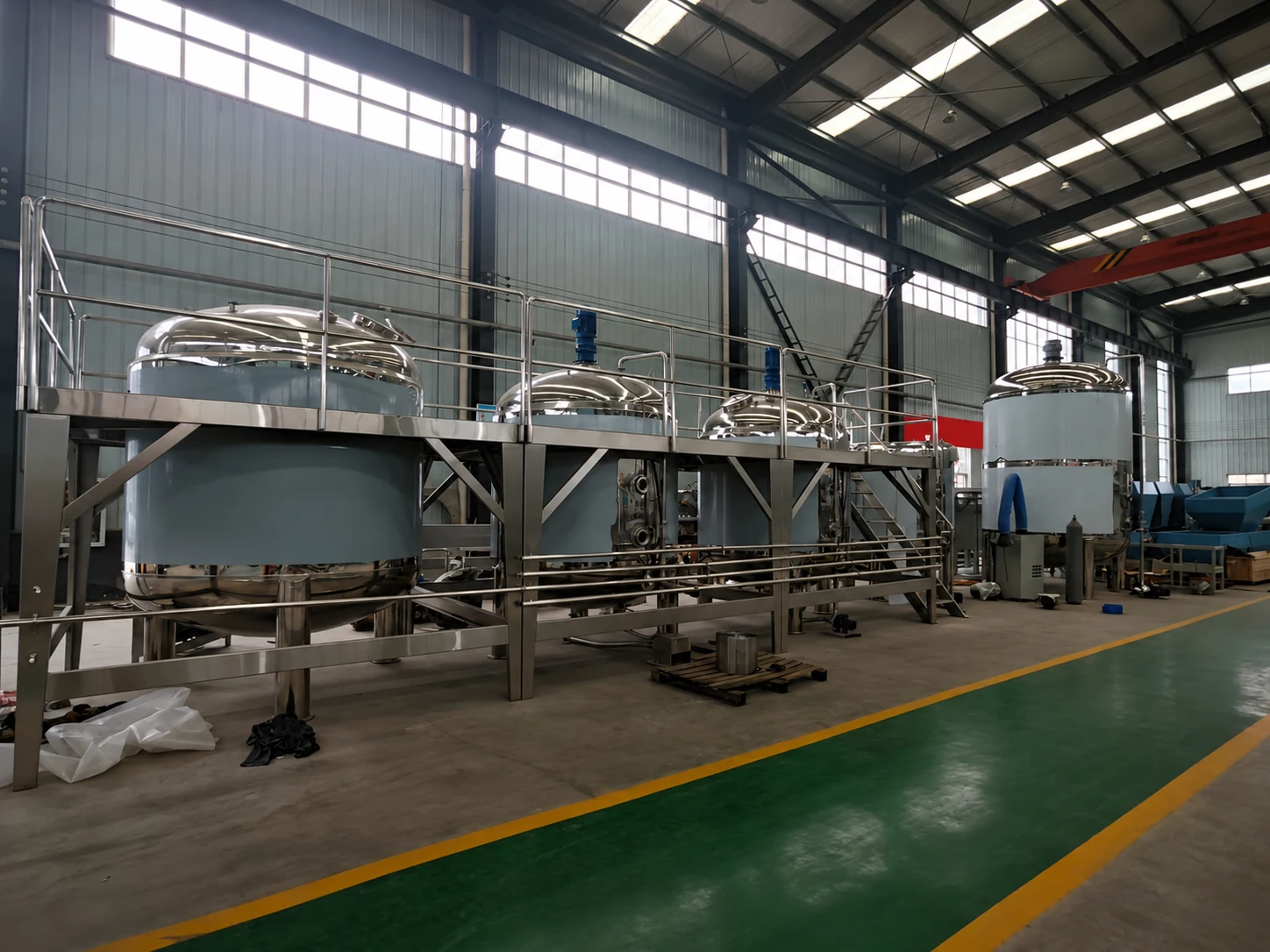
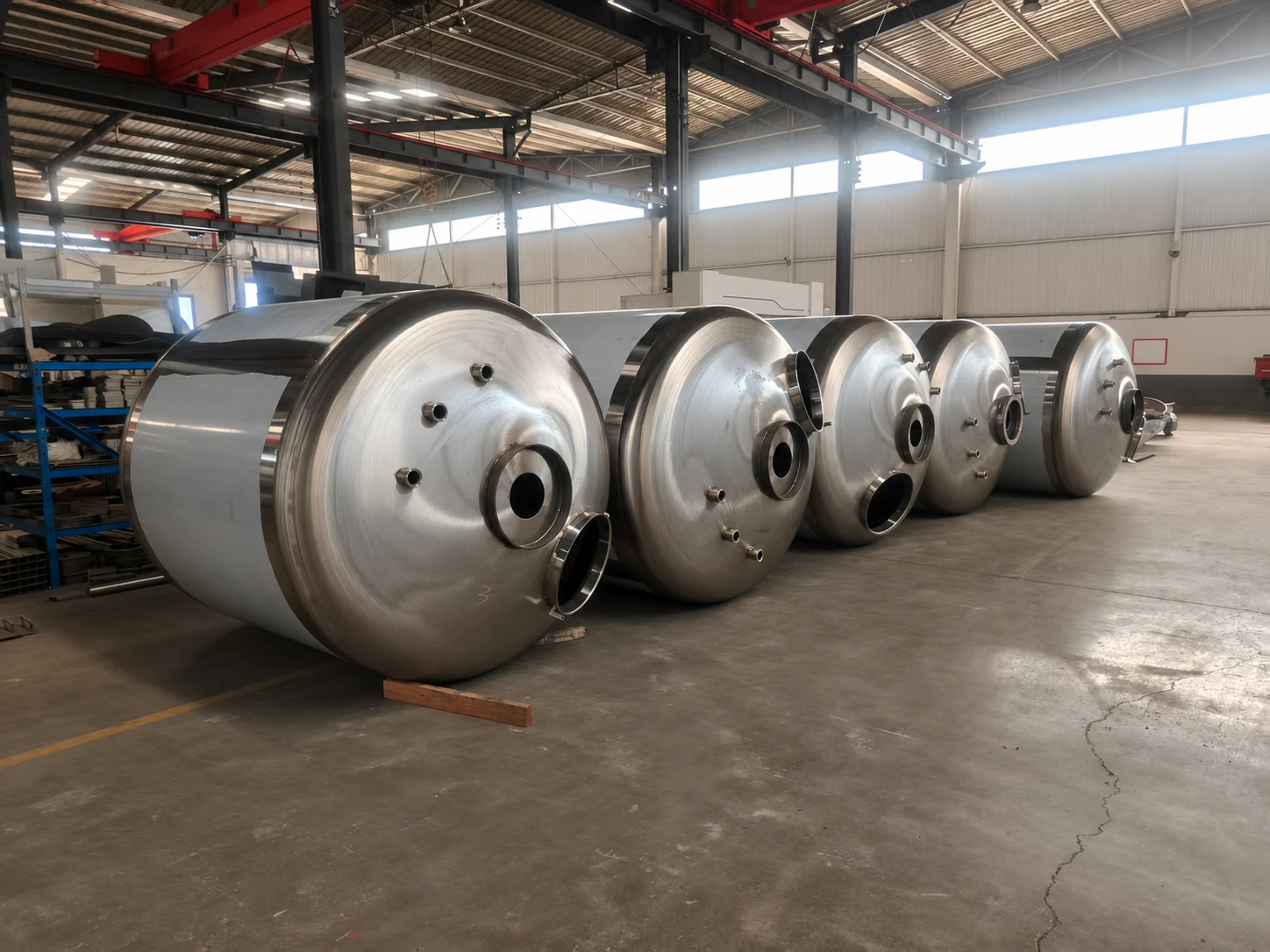
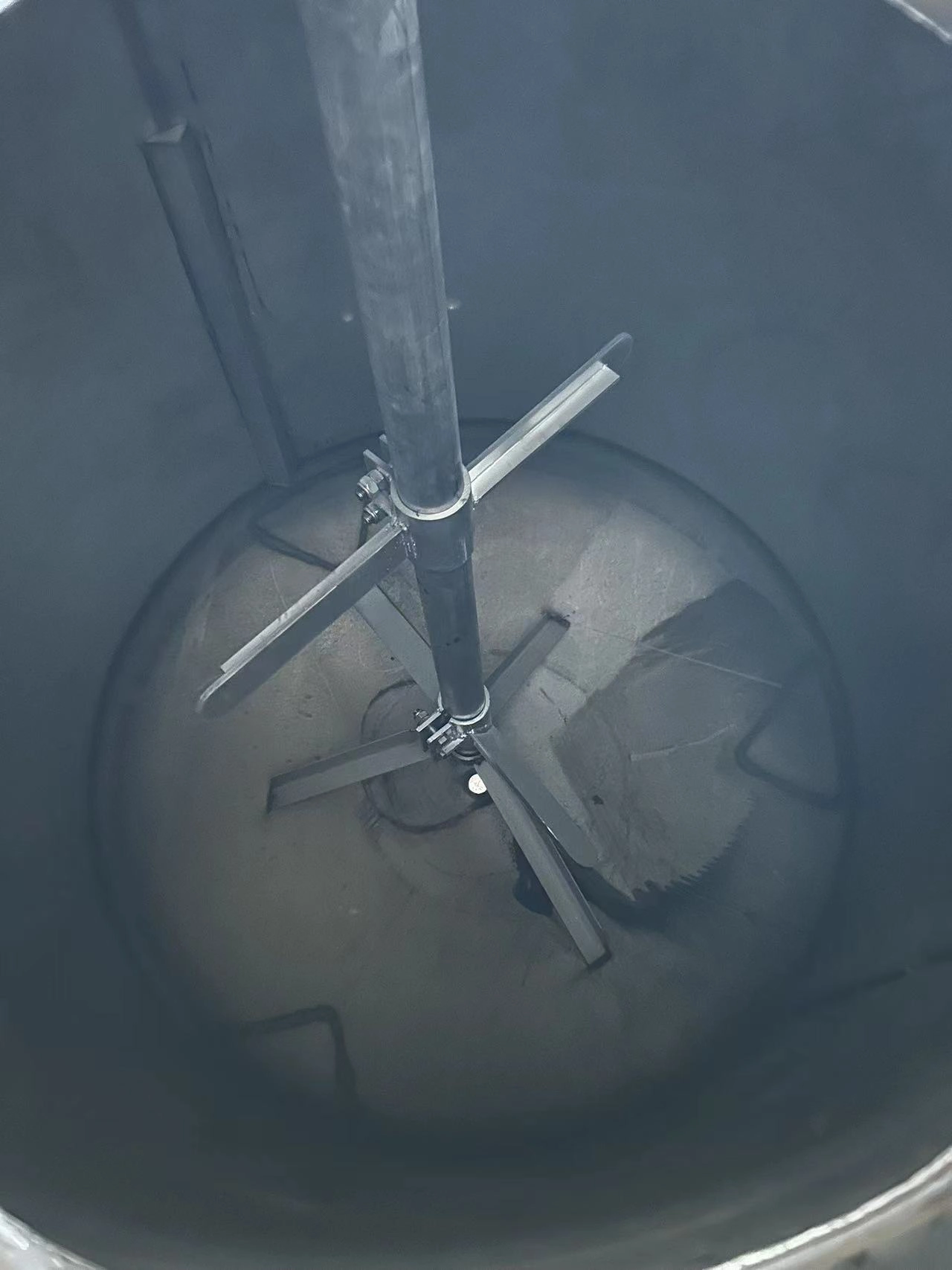
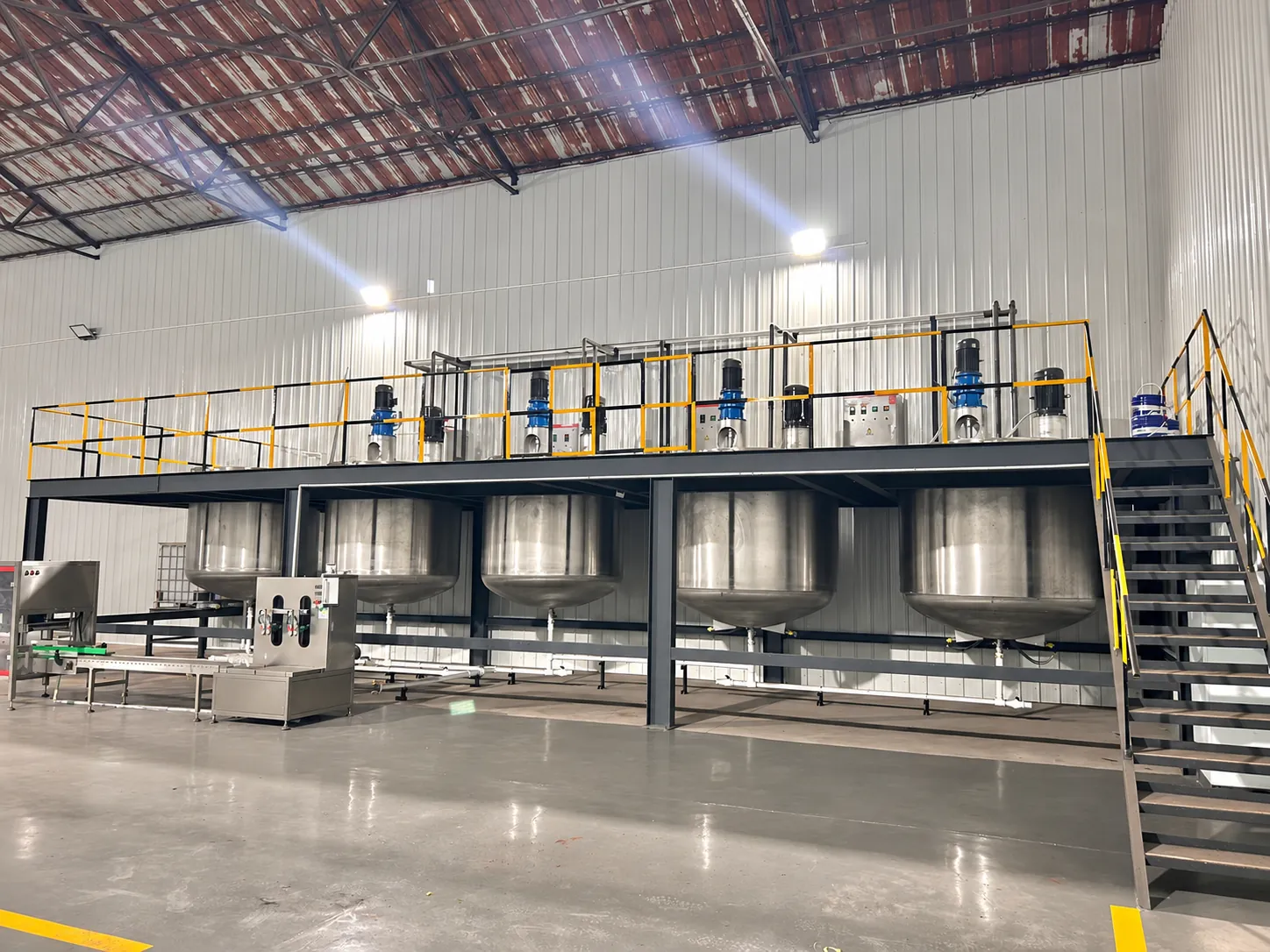
SAFI supplies liquid fertilizer mixing tanks and storage tanks for clear solutions, suspensions and gel formulations. A mixing tank is used to dissolve or blend ingredients. A holding tank receives the finished batch and can feed the filling machine while the next batch is being prepared. We size each vessel for the job it will do on the production line.
Mixing Tanks for Clear, Suspension and Gel Fertilizers
| Fertilizer type | Mixing and holding requirements |
|---|---|
| Clear liquid fertilizer | A conventional agitator can circulate the liquid while soluble powders are added and dissolved. A finished-product storage tank may be specified without agitation where the formulation stays stable under the expected storage conditions. |
| Suspension fertilizer | The preparation stage may need a disperser or high-shear mixer. For finished-product holding, an agitated storage tank can be specified to limit settling and keep the product uniform during transfer and filling. |
| Gel liquid fertilizer | Agitator torque, impeller geometry and discharge arrangement are selected around product viscosity and operating temperature. The holding tank and its outlet also need to suit the way the gel will be pumped to the filling machine. |
A mixer for powder dissolution and an agitator for finished-product holding serve different duties. Where the formulation requires a controlled reaction, a liquid fertilizer reactor tank can be specified for the preparation stage
Agitator Power, Shaft and Impeller
A tank’s volume is only the starting point for agitator selection. We also look at liquid density, viscosity, solids content, operating level and whether the agitator will dissolve powders, blend liquids or keep solids suspended.
| Component | What we specify |
|---|---|
| Motor and gearbox | Motor power in kW, shaft speed in rpm and gearbox torque for the mixing duty. If the agitator must restart with product in the tank, we take that operating condition into account. |
| Agitator shaft | Shaft material, diameter, length and support arrangement. These are selected for the torque and bending loads imposed by the impeller and liquid. |
| Impeller and blades | Impeller type, diameter, blade geometry and number of stages. Their position is selected around the tank shape, the required circulation and the minimum operating level. |
| Tank construction | Stainless steel grade, shell and bottom thickness, and reinforcement at the agitator mounting point. The specification takes account of liquid density, tank dimensions, mounting loads and any heating or cooling jacket. |
For long-term service, the drive, shaft, impeller and tank structure need to be sized together. We select 304 or 316 stainless steel according to the formulation and service conditions, including operating temperature and cleaning requirements.
Working Volume and Tank Size
We specify working volume and total tank volume separately, in cubic metres. For a mixing tank, working volume is the batch the vessel is designed to handle at its operating level. Total volume also allows for free space above the liquid during powder charging and agitation. If the planned batch is close to the usable limit of a standard tank, we generally recommend the next larger size and check that the agitator will still work at the lowest planned fill level.
For a liquid fertilizer storage tank, capacity is based on how much product arrives from each batch, how long it needs to be held and how quickly the filling machine draws it down. Outlet size, elevation and transfer pump connections are selected together so the tank can feed the filling stage.
Heating, Cooling and Tank Connections
Heating or cooling can be added where the formulation needs temperature control during dissolution, blending or holding. Tank options can include a jacket, variable-speed control, temperature measurement and connections for product transfer or cleaning. The arrangement depends on the formulation and the utilities available at the plant.
Request a Tank Configuration
Send us the fertilizer type, required working volume, product density and viscosity, and the planned operating temperature. For a mixing tank, include the raw materials and addition sequence. For a storage or holding tank, include the batch transfer volume, planned holding time and filling rate. SAFI MACHINERY can then specify the vessel size, agitator and tank connections for your production line.